
Garment Printing, Embroidery and Wash Techniques
How each finish looks, feels, and wears, so you can brief artwork with the right method in mind.
Printing
Most printed effects start from screen printing: one screen per colour, with different inks and additives creating soft, opaque, raised, velvety, or metallic results. Digital and transfer printing cover artwork that screens handle poorly.
-
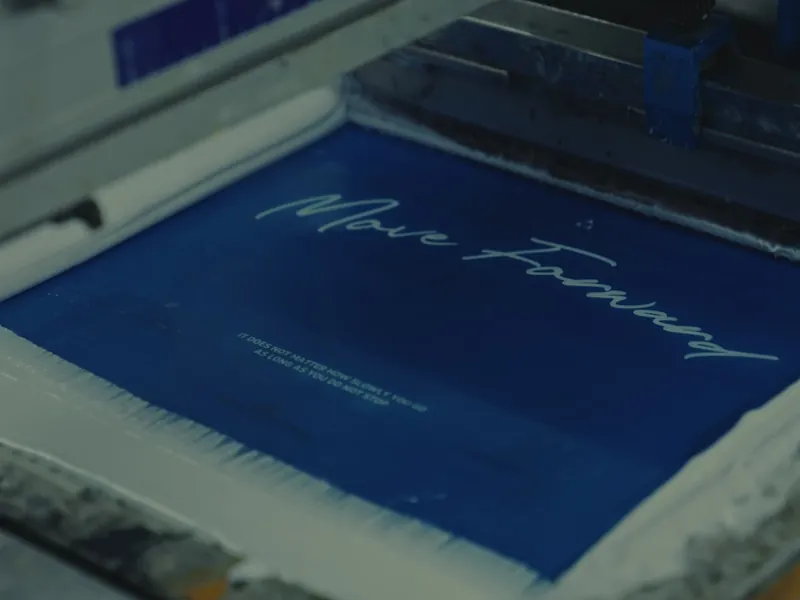
Screen printing
Ink is pushed through a fine mesh screen onto the garment, with one screen for each colour. It is the most widely used garment print method and the base for many of the effects below.
- Best for
- Bold graphics with a limited colour count and repeat quantities.
- Watch for
- Every added colour needs another screen, so cost rises with colour count. Smooth gradients need halftone separation.
-
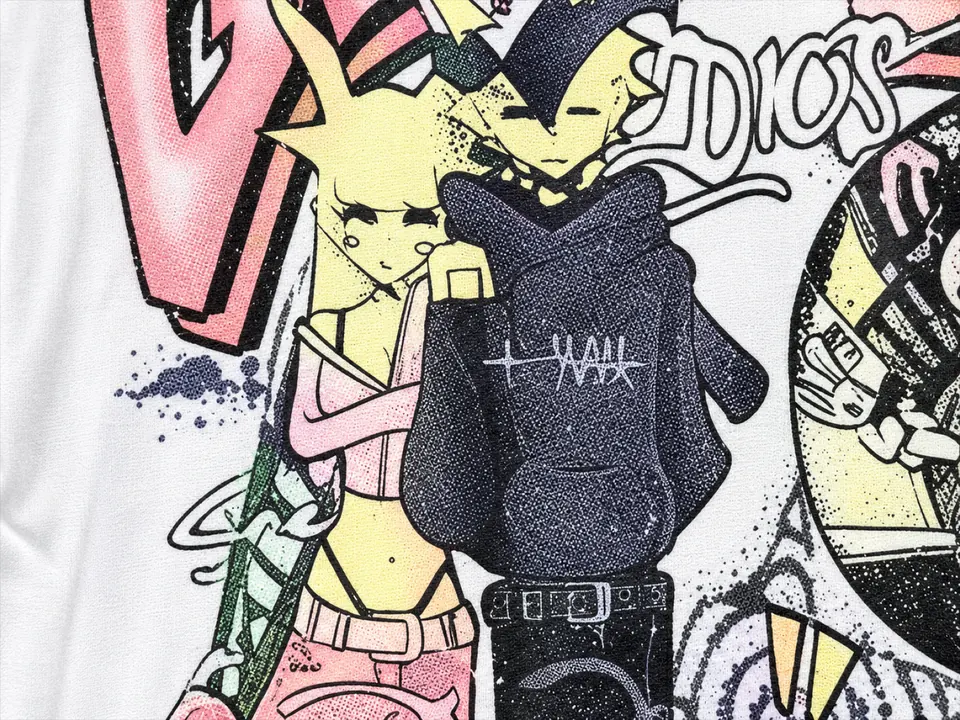
Direct-to-garment digital print
Also called DTG
The artwork is printed straight onto the garment, much like an inkjet printer on paper. No screens are made.
- Best for
- Photographic artwork, gradients, fine detail, and many colours.
- Watch for
- Results depend on fibre content and garment colour; dark garments need a white base layer. Approve a printed sample on the actual blank.
-
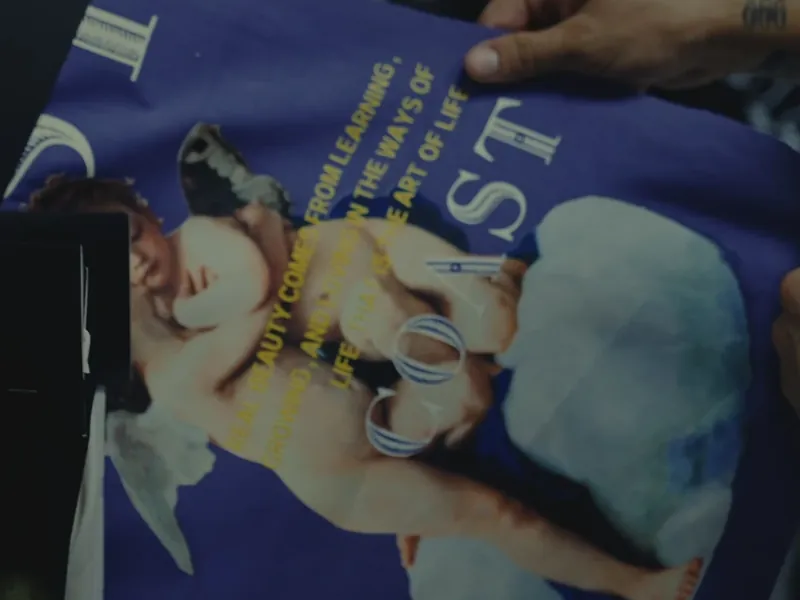
Rubber print
Also called opaque print
An opaque, rubbery ink layer that sits on top of the fabric. It covers strongly and is easy to colour-match.
- Best for
- Light and dark garments alike, and graphics where accurate colour matters.
- Watch for
- Noticeable thickness, little breathability, and a slight sheen under light. More colours cost more.
-
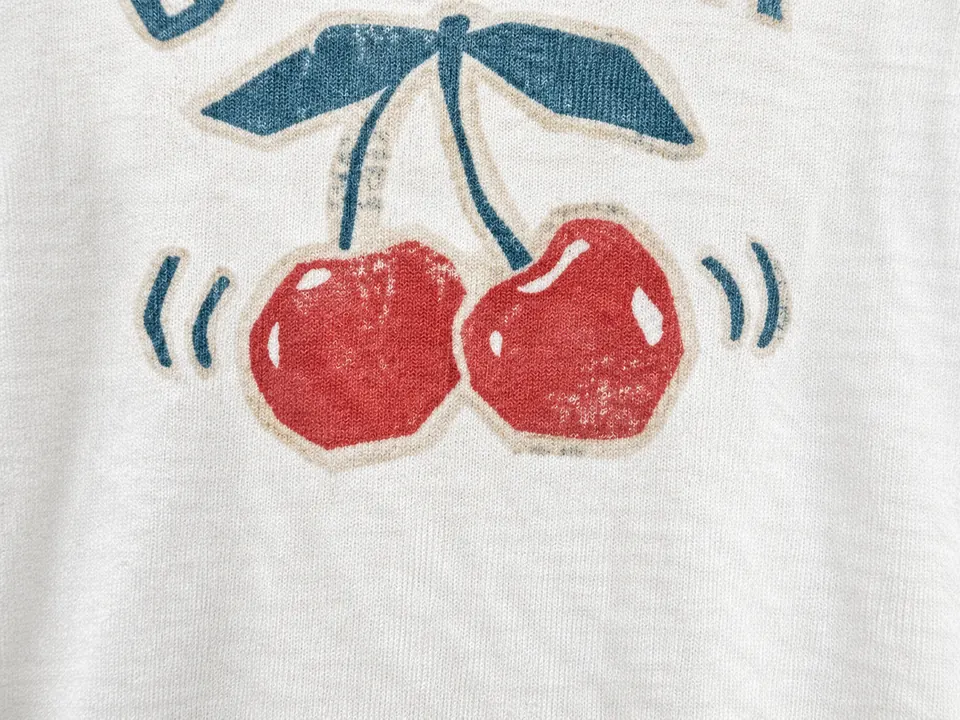
Water-based print
The ink soaks into the fibres rather than sitting on top, so it behaves much like dyeing. Colourfastness is good and the print feels soft and breathable.
- Best for
- Soft-hand prints on white and light-coloured garments.
- Watch for
- Low opacity: it does not cover well on dark garments.
-
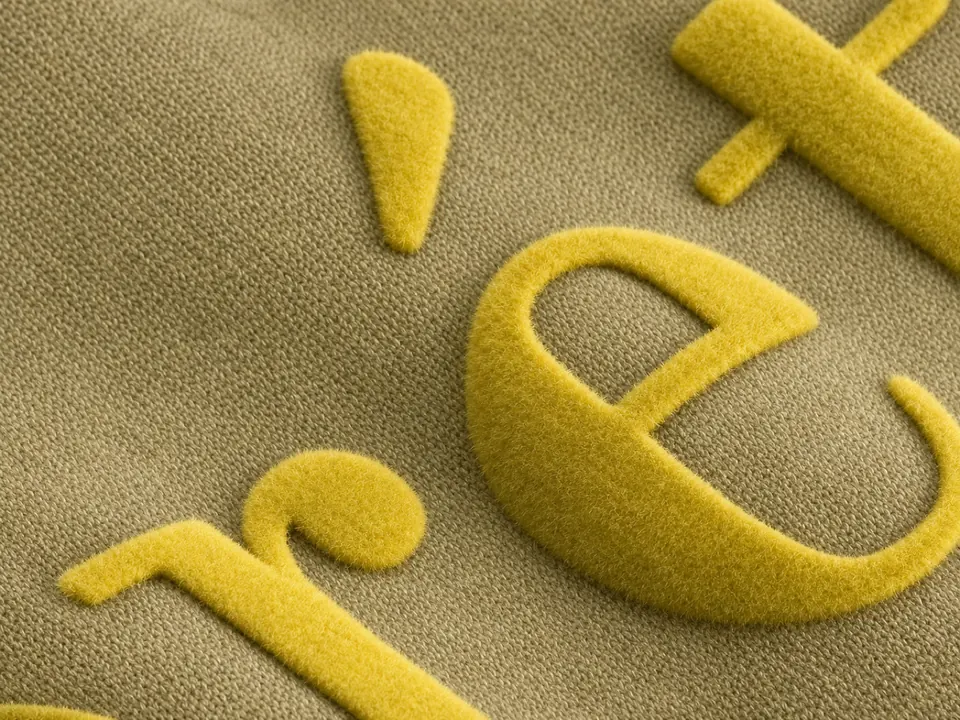
Flock print
Short fibres are bonded onto a printed adhesive, giving a raised, velvety, matte surface. Long-pile flock gives a fluffier, fur-like finish.
- Best for
- Autumn and winter ranges, sweatshirts, and lettering that should feel premium.
- Watch for
- Flock can shed fibres and picks up lint and dust.
-
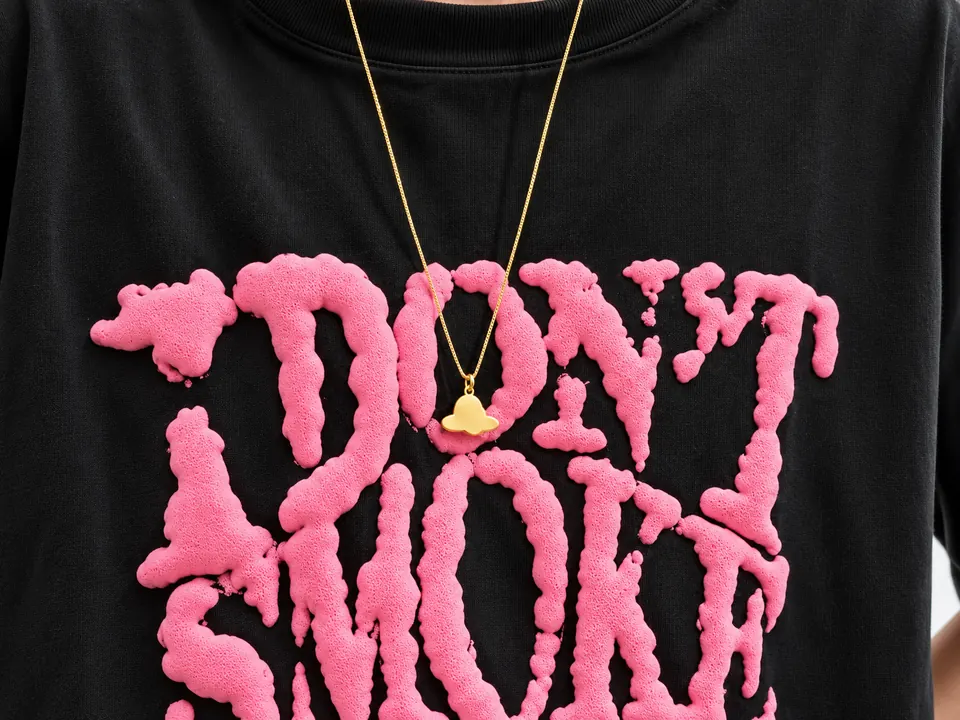
Puff print
A foaming additive expands under heat, lifting the print into soft, rounded relief that can look close to embroidery. It stays soft and flexible.
- Best for
- Raised lettering and graphics with a playful, tactile finish.
- Watch for
- The raised surface can flatten and its colour can wear with friction and repeated washing; wash inside out.
-
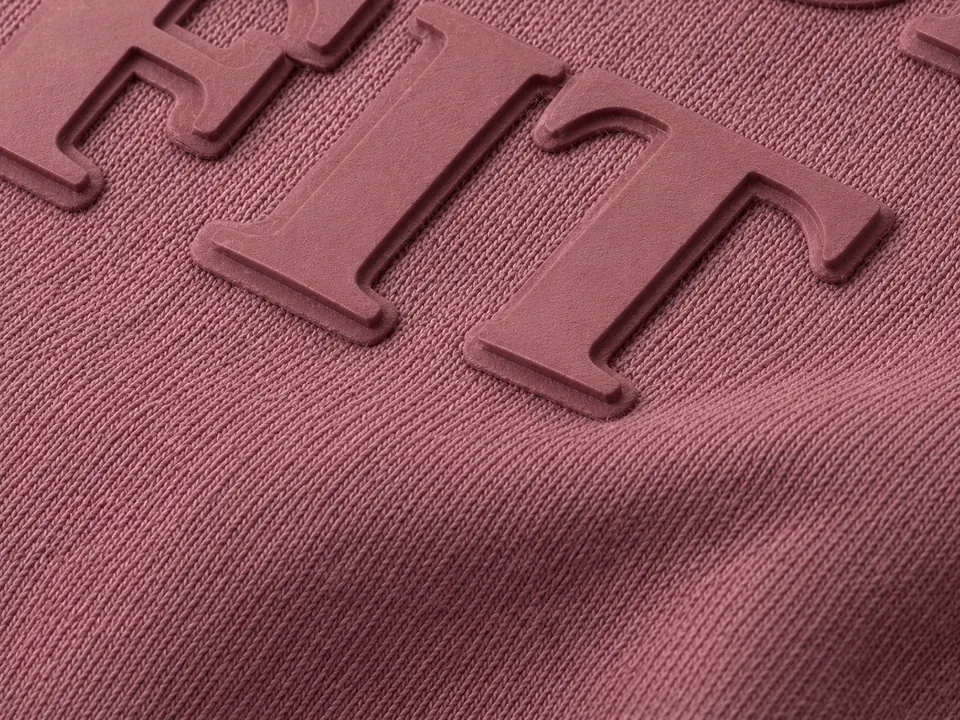
High-density print
Thick layers of ink are built up through a deep stencil to create sharp-edged, dimensional shapes with a soft rubber touch. A cost-effective way to add 3D depth.
- Best for
- Logos and type that need clean, crisp, raised edges.
- Watch for
- Large solid areas feel heavy; keep it to lettering and marks.
-
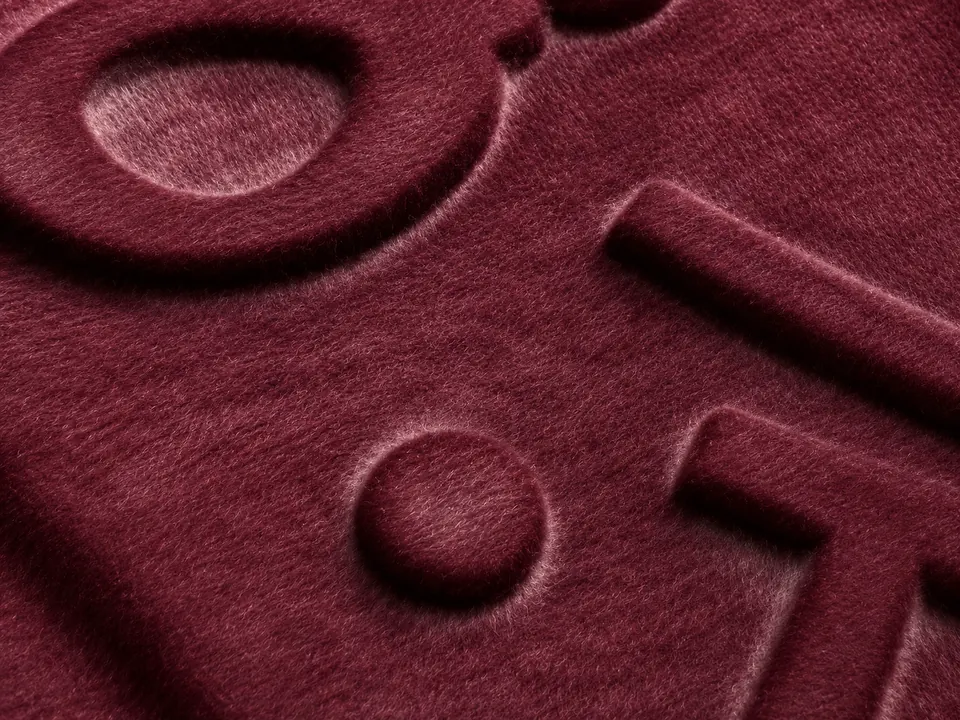
3D heat embossing
A mould presses the design into the fabric under high heat and pressure. The relief is part of the fabric surface itself, usually tone-on-tone with no ink.
- Best for
- Subtle, tonal branding on fleece, heavier knits, and blends.
- Watch for
- A mould has to be made for each design. Relief holds best on polyester and blends and can soften after washing on all-cotton fabric, so test it on the actual fabric.
-
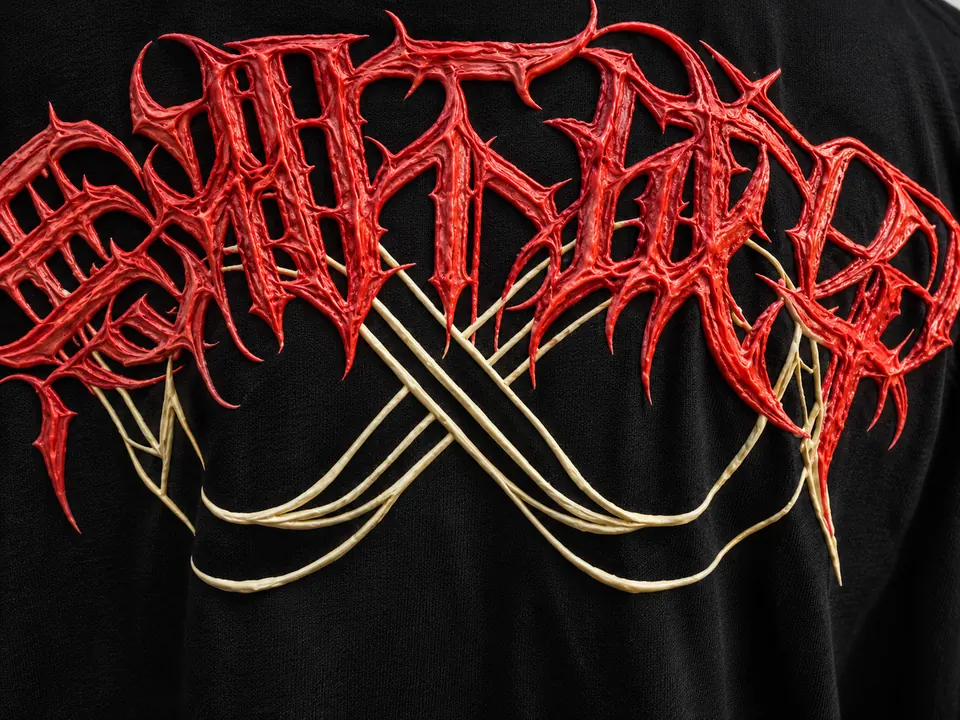
Textured lava print
A thick, drawn-out paste creates flowing, molten or dripping textures with real depth. Each print carries an artistic, slightly irregular surface.
- Best for
- Statement graphics where texture is part of the design.
- Watch for
- The texture varies from piece to piece; approve a strike-off before bulk.
-
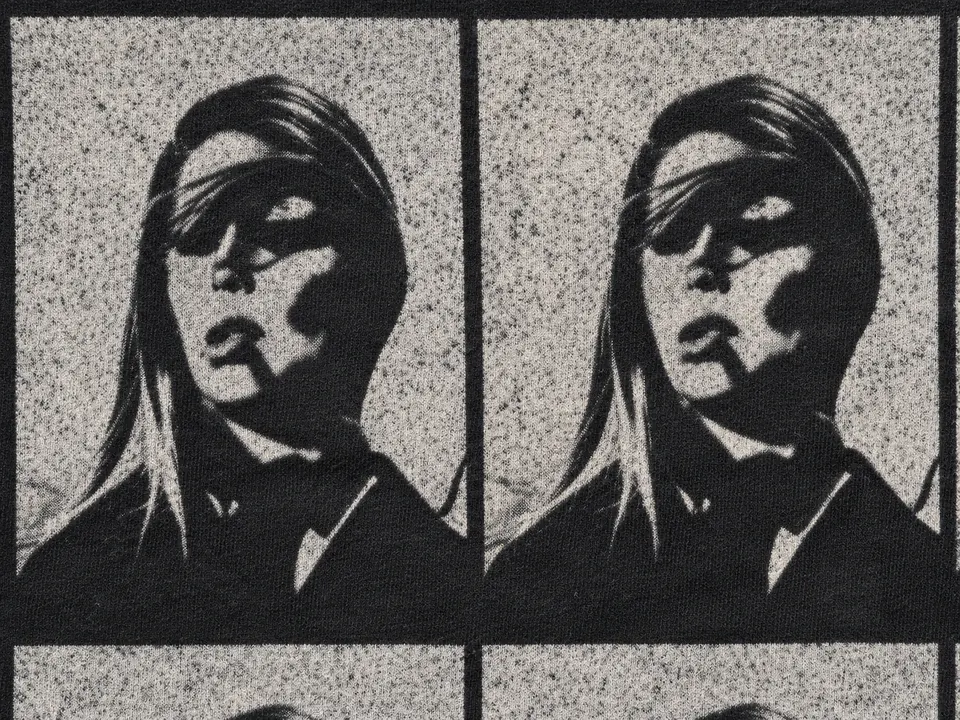
Discharge print
Instead of adding ink, the print removes the garment dye, lightening the fabric where it is printed. There is no rubbery layer on the surface.
- Best for
- Vintage and washed looks on dark garments.
- Watch for
- Works on 100% cotton only. The discharged colour is not fully predictable and can be uneven.
-
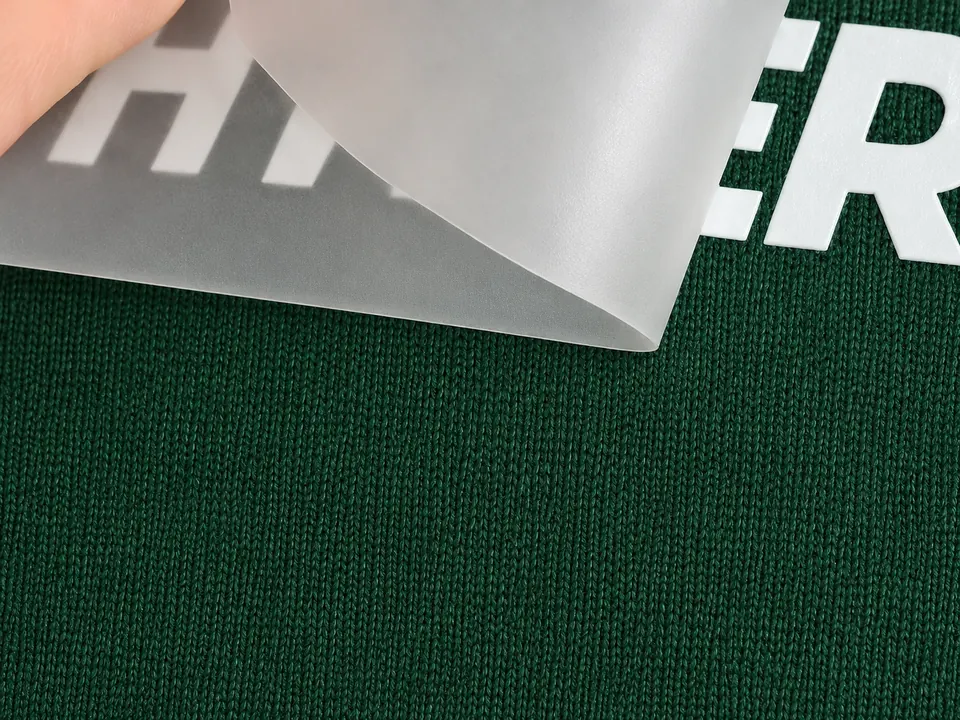
Heat transfer
The design is first printed onto transfer film, then applied to the garment with heat and pressure. Fine detail and photo-like colour are possible, and transfers can be placed freely.
- Best for
- Small, detailed marks such as labels, sleeve hits, and numbers.
- Watch for
- Heavy, non-breathable hand; not suited to large areas, and it can peel after many washes.
-
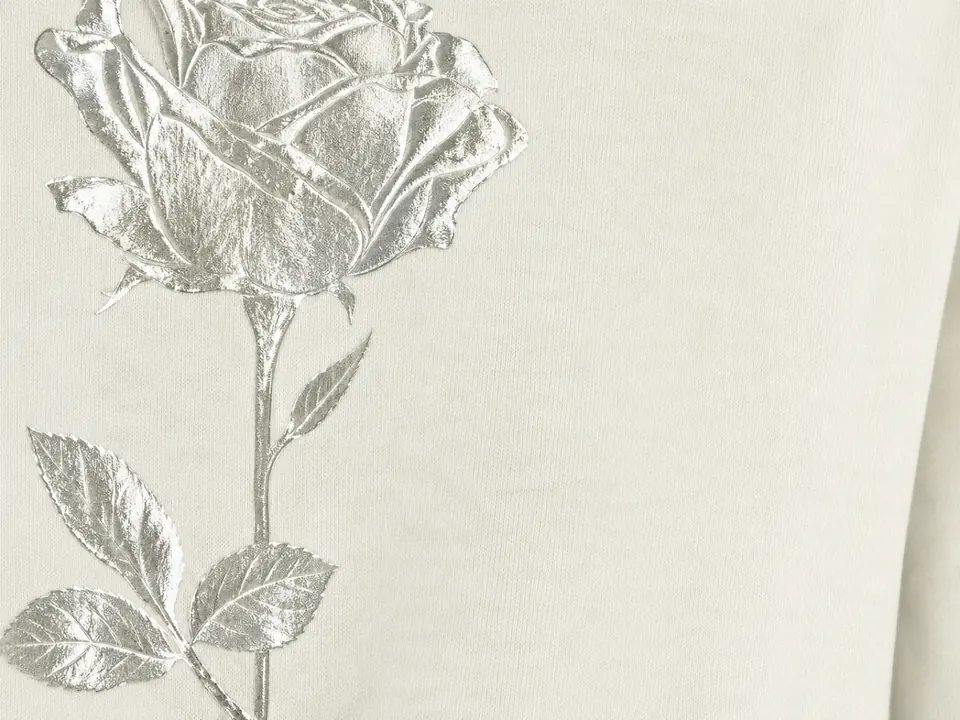
Gold and silver foil
Metallic foil is bonded to a printed adhesive layer, giving a bright, mirror-like gold or silver finish.
- Best for
- Premium logos and accents that should catch the light.
- Watch for
- Wash inside out and do not iron directly on the foil.
Embroidery
Embroidery adds texture with thread, fabric, beads, or cord. Stitch count, coverage, and the base fabric decide how each method runs and what it costs.
-
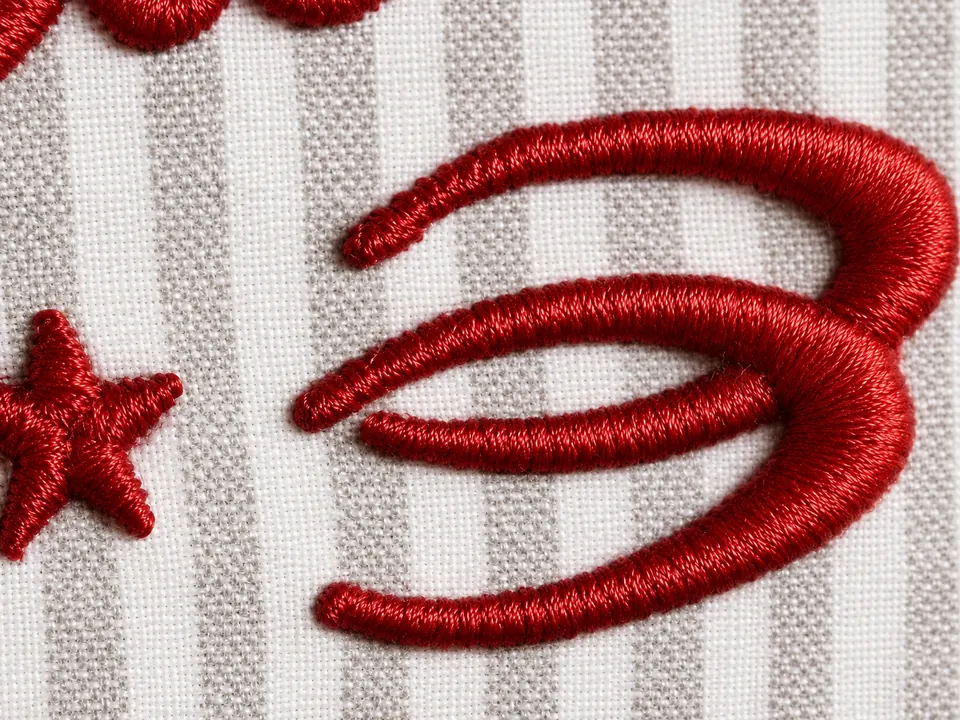
Raised satin embroidery
Also called corded or padded satin stitch
Satin stitches wrap tightly over a core cord, laid side by side to build rounded, raised outlines with full, clean lines.
- Best for
- Script logos and outlines that need clear relief.
- Care
- Gentle cold wash, inside out in a laundry bag. Dry in shade; iron on the reverse at low heat.
-
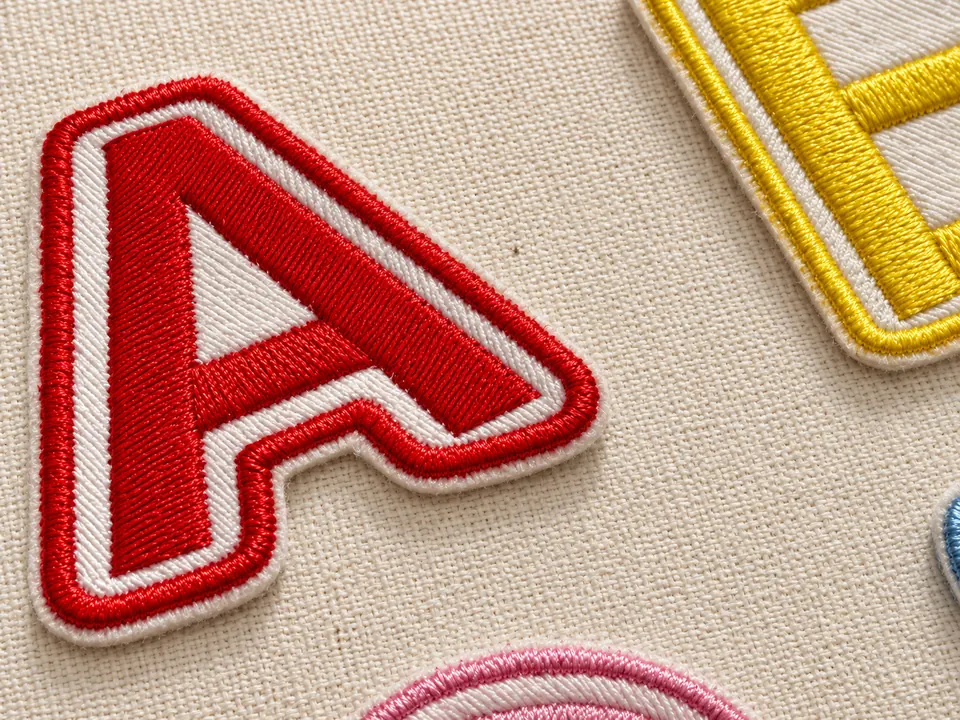
Appliqué embroidery
Pre-cut fabric shapes are fixed to the garment and finished with a stitched edge. Strong dimension and layered colour from a simple process.
- Best for
- Varsity letters, large badges, and layered colour blocks.
- Care
- Wash inside out on a gentle cycle and avoid long soaking. Iron at low heat with a pressing cloth.
-
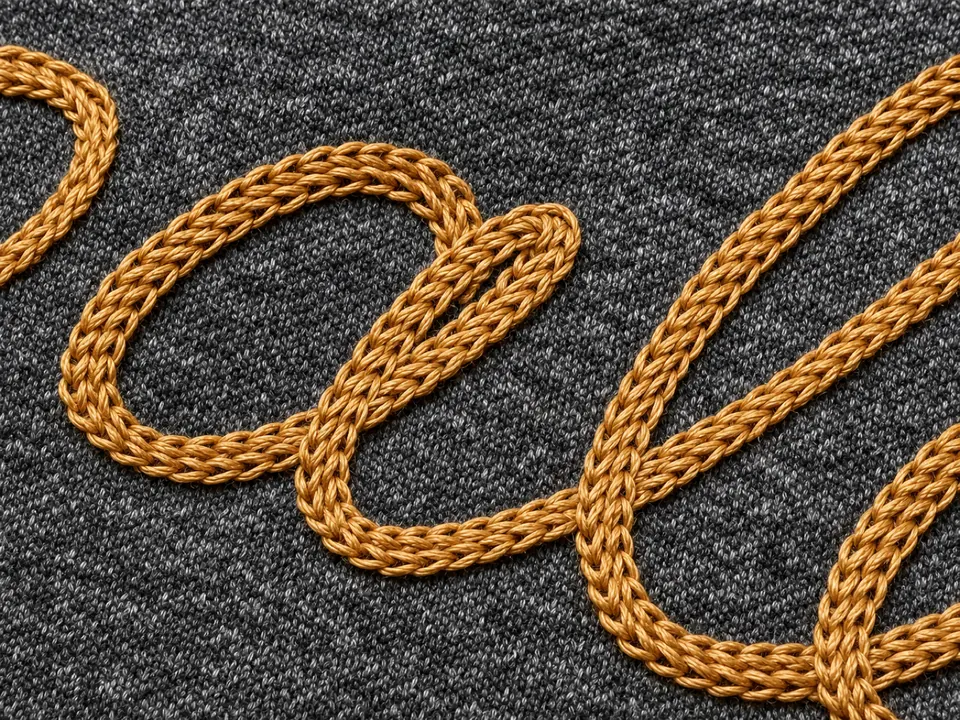
Chain-stitch embroidery
Interlocking loops form a continuous chain line. Made by machine or by hand, the stitch is flexible and stretches slightly without breaking.
- Best for
- Flowing script and line art, including on knits and stretch fabrics.
- Watch for
- Loops can snag on sharp objects. Wash cold in a laundry bag.
-
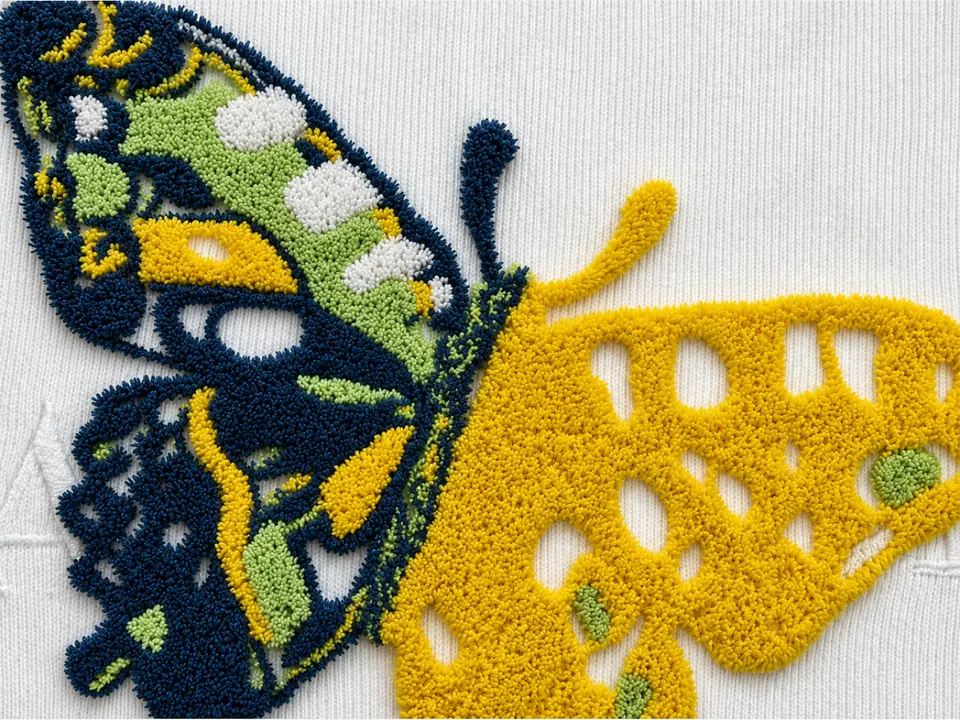
Tufted embroidery
Also called toothbrush embroidery
Dense stitches run over a temporary foam support. Once it is cut and removed, the threads stand upright like brush bristles, giving a full, springy surface.
- Best for
- Bold streetwear lettering and graphics with strong relief.
- Care
- No bleach or tumble drying. Iron at low heat with a cloth so the pile is not crushed.
-
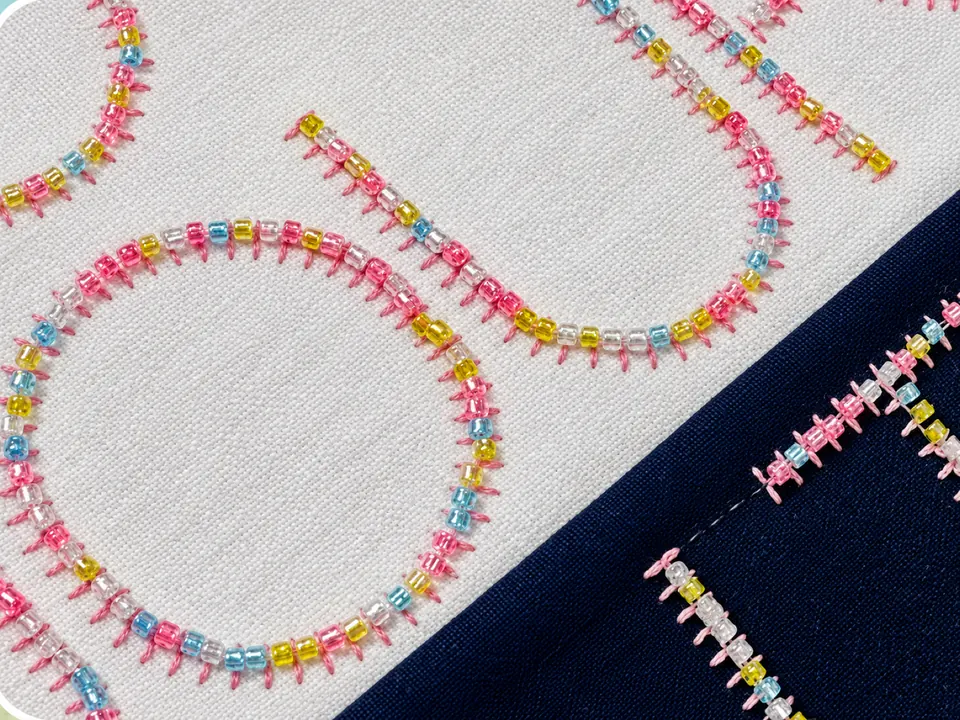
Seed-bead embroidery
Small 1 to 2 mm glass or pearl-style beads are stitched on one by one or in strings, alone or combined with satin stitching.
- Best for
- Fine, decorative logos and detailing with a crafted finish.
- Care
- Wash inside out in a laundry bag. No bleach or tumble drying; store away from sharp objects.
-
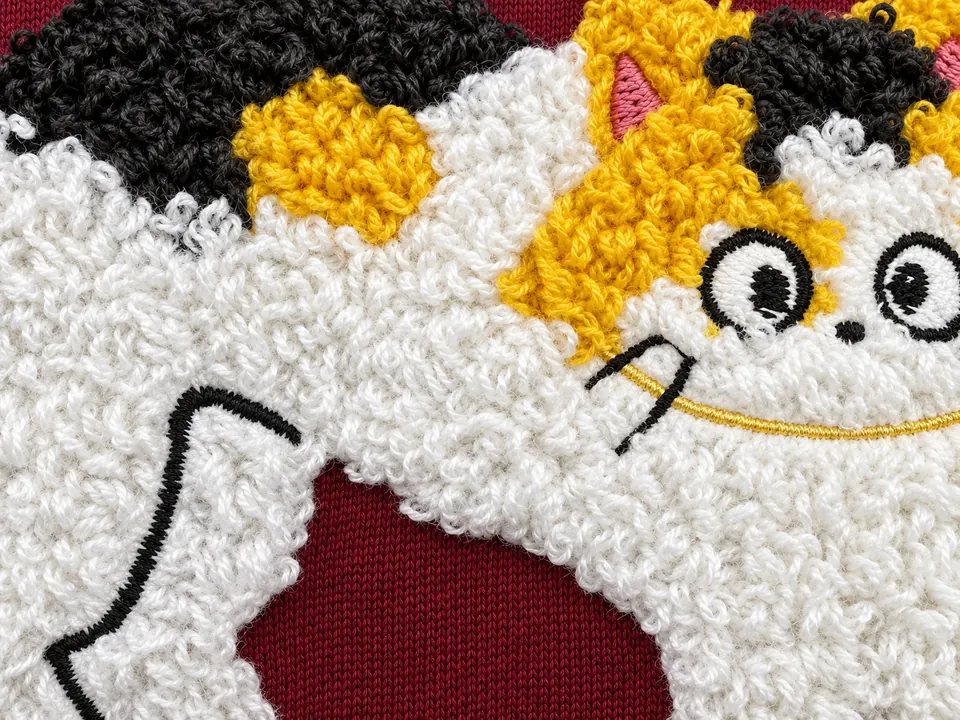
Chenille loop embroidery
Also called terry loop embroidery
A specialist machine forms raised loops like a towel surface, giving a soft, deep, textured result.
- Fabrics
- Fleece, knits, cotton, denim, and canvas. Avoid very thin silk or mesh.
- Care
- No high-heat drying or long sun exposure; dry in shade.
-
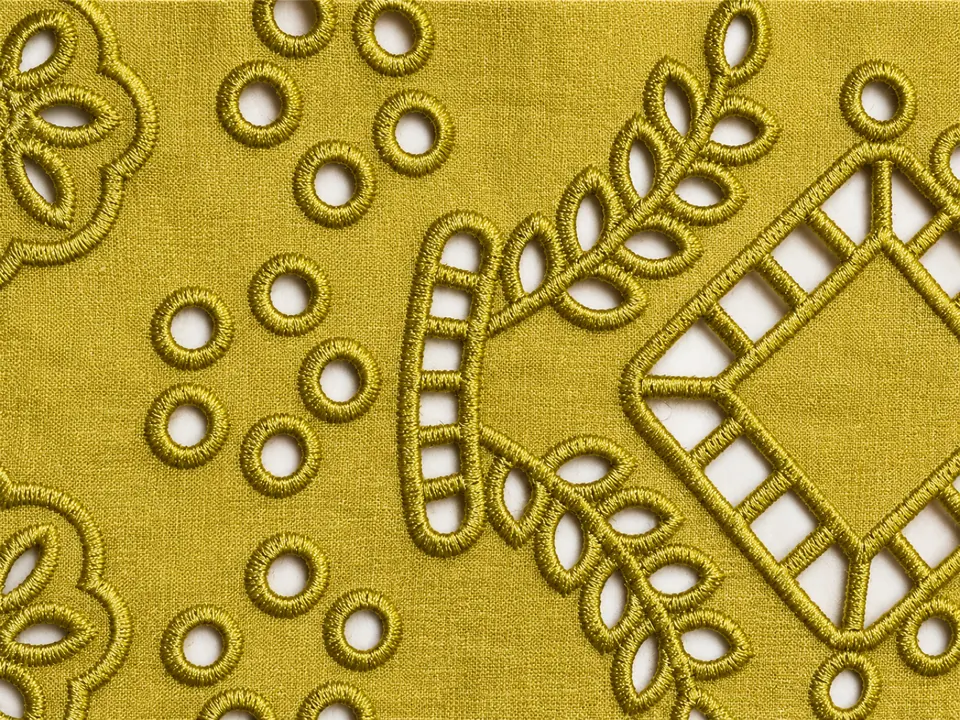
Laser-cut embroidery
A laser cuts precise openings in the fabric, then satin stitching or appliqué finishes the edges for a light, open-work effect.
- Fabrics
- Cotton, linen, polyester, silk, and light denim. Mesh, stretch fabrics, and leather need testing.
- Care
- No bleach or tumble drying. Iron at low heat with a cloth and do not press hard on cut edges.
-
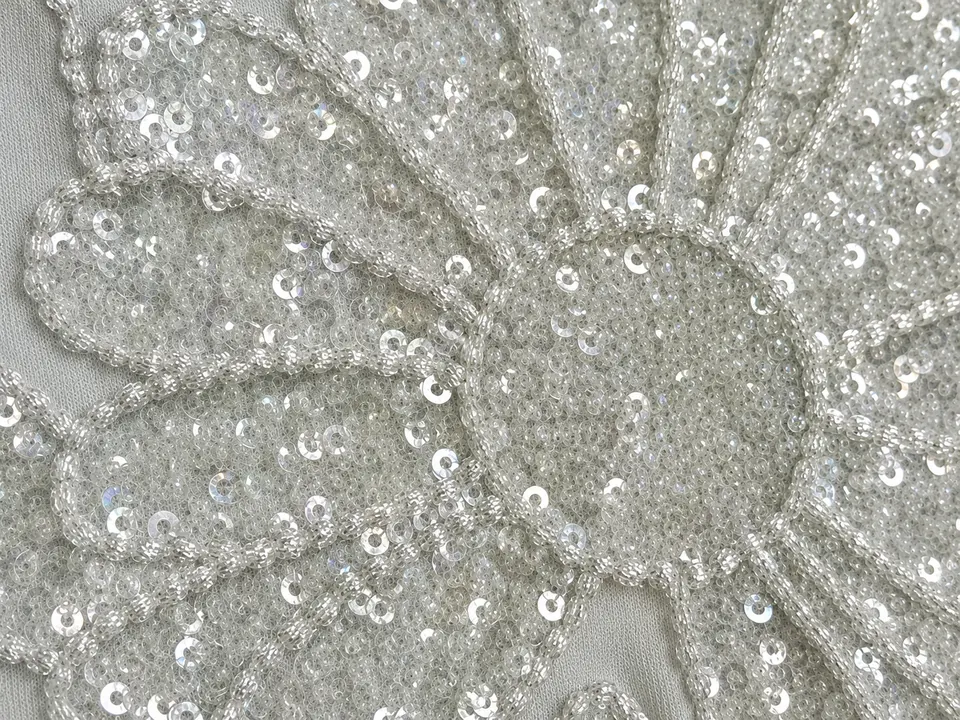
Sequin embroidery
Round or shaped sequins are stitched on by specialist machine or by hand. The reflective surface sparkles under light.
- Fabrics
- Woven cotton, satin, mesh, denim, heavy knits, and wool.
- Care
- No high-heat drying, long sun exposure, or bleach.
-
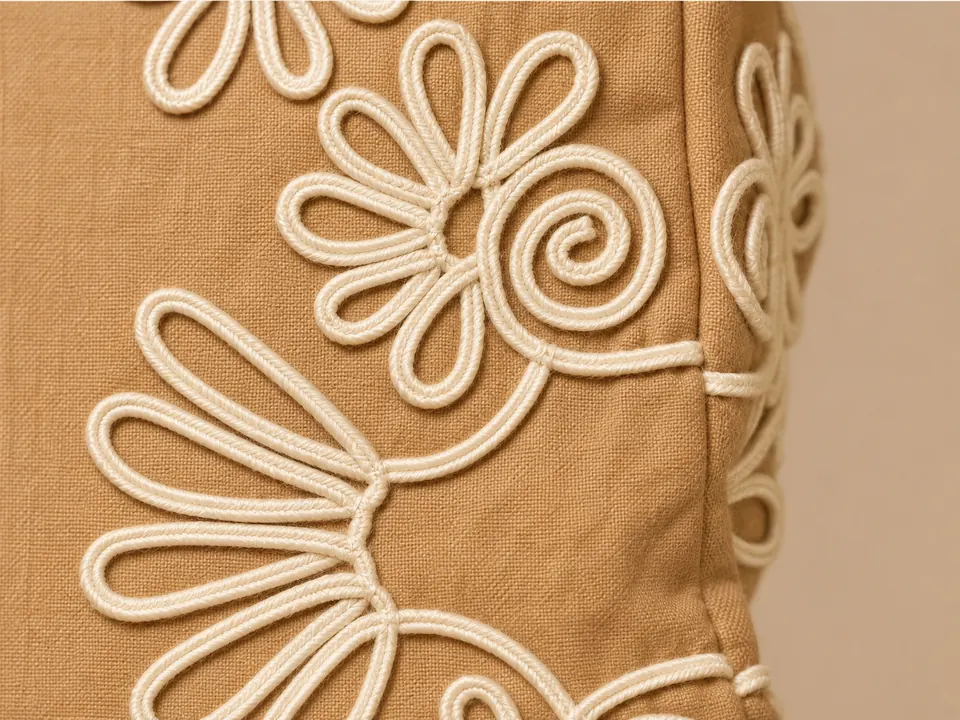
Cording embroidery
Also called soutache or tape embroidery
Narrow braid, cord, or flat tape is laid along the design and stitched down, giving smooth, raised lines with a vintage feel.
- Fabrics
- Cotton, satin, heavy knits, denim, and wool. Avoid very thin silk or mesh.
- Care
- No high-heat drying or long sun exposure.
Garment washes
Washes are applied to the finished garment to fade colour and add a worn, lived-in surface. They are part of a Custom Manufacturing order, and because every fabric reacts differently, each wash is confirmed on a sample first.
-
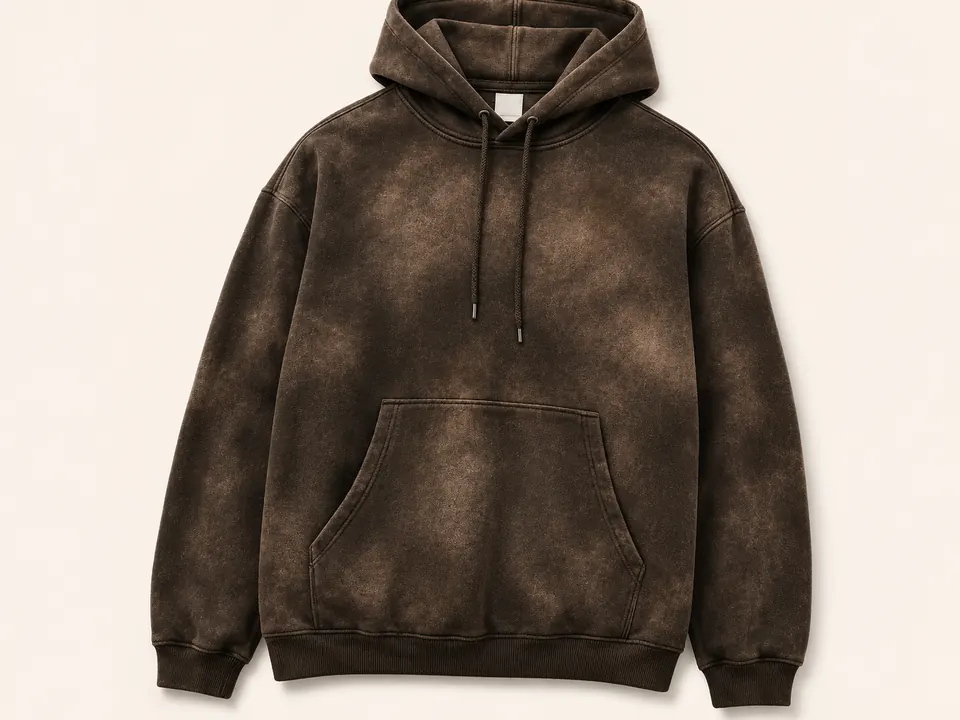
Salt wash
Graded industrial salt and detergent tumble with the garments, rubbing off surface colour for a natural fade and soft, lived-in texture.
- Fabrics
- Cotton, linen, denim, fleece, and most hard-wearing fabrics.
- Pre-treat
- Add graded salt
- Tumble with heat
- Rinse
- Dry and finish
Grain size, quantity, time, and temperature set how far the colour fades. It can be combined with garment dyeing.
-
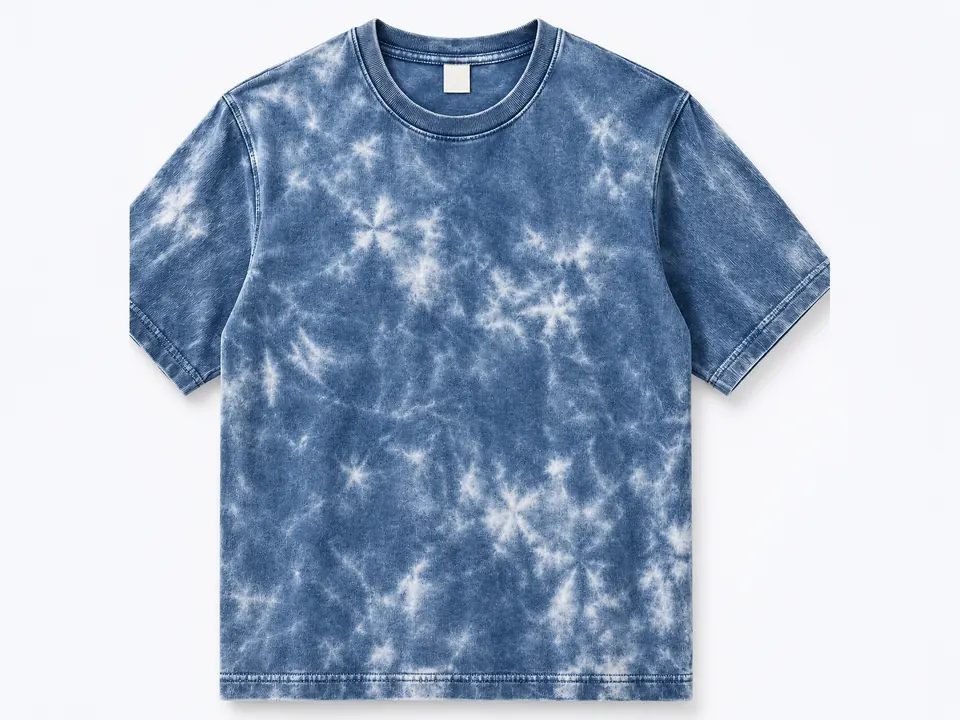
Snow wash
Pumice stones treated with a bleaching agent are tumbled with the garments without water, leaving irregular white, snowflake-like marks across the surface.
- Fabrics
- Mid- to heavyweight cotton, fleece, T-shirts, and denim.
- Pre-treat
- Load treated pumice
- Dry tumble
- Rinse and neutralise
- Dry and finish
Stone size and tumbling time decide the size and density of the marks.
-
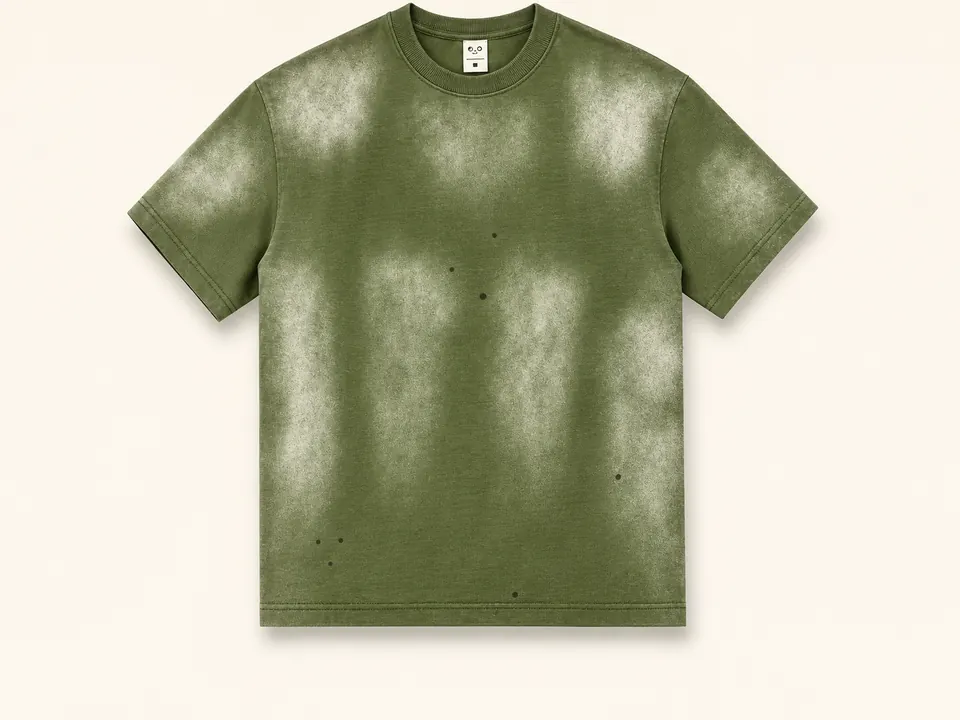
Spray wash
A fading agent is sprayed onto chosen areas of the garment, creating local or all-over fades with clear contrast and control over placement.
- Fabrics
- Cotton, denim, fleece, and many blends after testing.
- Pre-treat
- Mix the fading agent
- Spray to the design
- Rinse and neutralise
- Dry and finish
Spray distance, dose, and timing set the depth and spread of the fade.
-
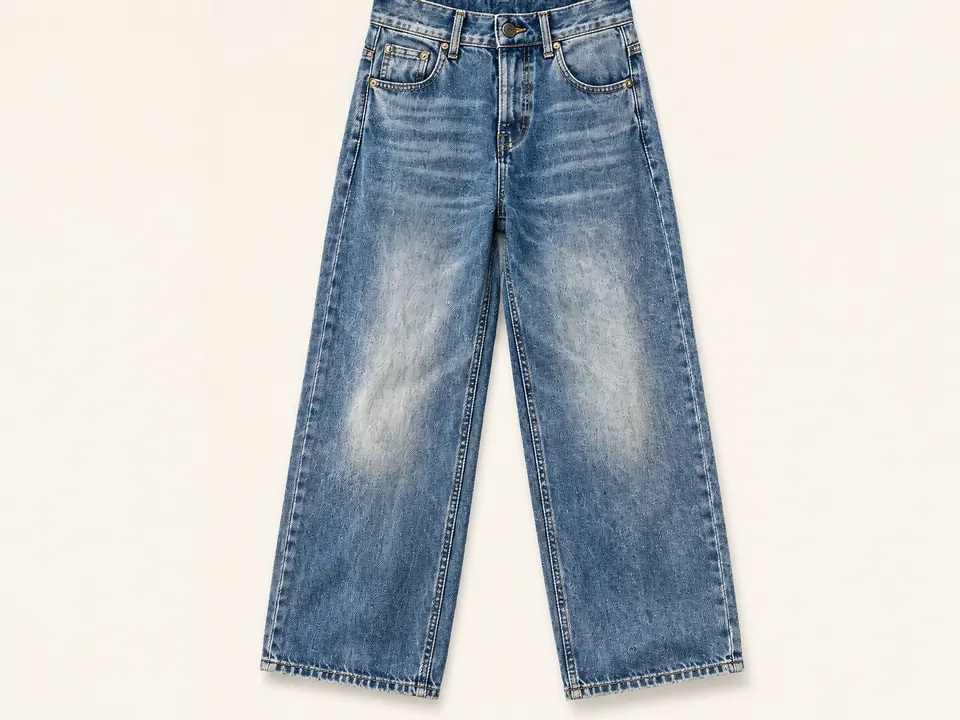
Stone wash
Pumice stones tumble with the garments in plenty of water. Impact and friction fade the colour and add natural abrasion for a worn, vintage look.
- Fabrics
- Denim, cotton, canvas, and other sturdy fabrics.
- Pre-treat
- Add pumice
- Wash at high water level
- Rinse and remove stones
- Dry and finish
Stone type, size, and wash time change both the abrasion and the final handfeel.
Not sure which finish fits?
Send the artwork, the garment, and the look you want. We compare methods against handfeel, fabric, and quantity, then confirm the route, minimum, and price in the quotation, with a strike-off or sample before bulk.
Have artwork ready? Send it for a method check.
We reply within one business day and sign an NDA on request.